
Building the Trust Layer for the Agentic Economy
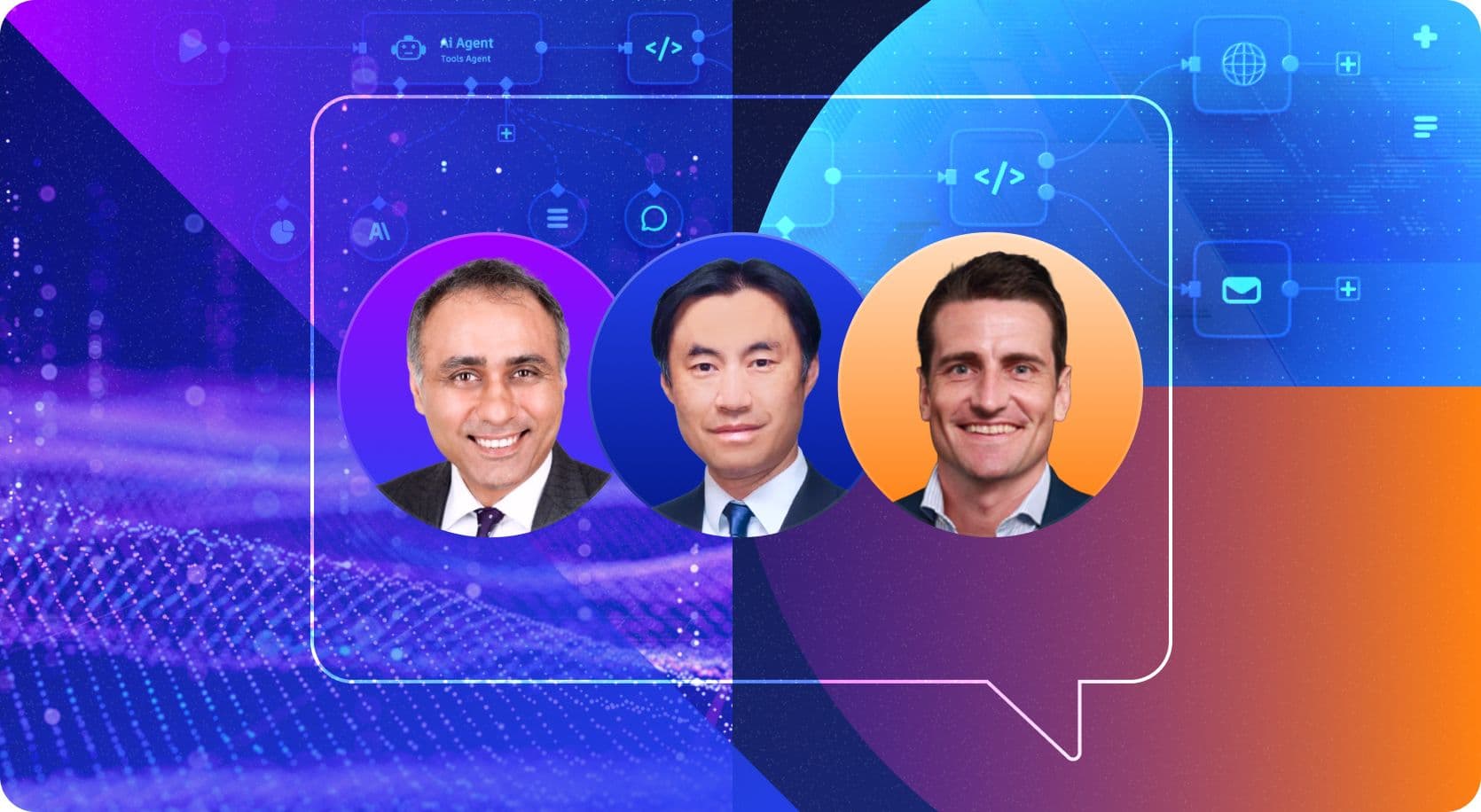
A conversation with Pavan Sethi (Managing Director, Technology Reinvention, Accenture – AWS Business Group Lead), Ryujiro Nemoto (Senior Vice President, Head of Digital Platform Service Business, NTT DOCOMO GLOBAL), and Peter Murray (Head of Go-To-Market, Asia Pacific Japan and China, Amazon Web Services (AWS)).
THE COLLABORATION
Q1: NTT DOCOMO GLOBAL brings deep expertise in cryptography, secure computation and the stewardship of trusted infrastructure, AWS provides cloud infrastructure and AI capabilities, and Accenture works at the intersection of technology and enterprise transformation. Could you help us understand why solving this particular challenge required all three perspectives coming together?
Pavan Sethi, Accenture: This challenge sits exactly where technology meets the realities of running a business. AI agents are advancing quickly, but enterprise adoption will only scale if organizations can demonstrate who or what acted, under whose authority, using which information, and with what oversight. Closing that gap is not simply an engineering problem. It requires a trusted technical foundation, a clear operating and governance model, and a practical path to adoption across complex enterprises and ecosystems.
That is why the three perspectives are complementary. NTT DOCOMO GLOBAL brings deep expertise in cryptography, secure computation and the stewardship of trusted infrastructure. AWS brings the cloud and AI services needed to operate at enterprise scale. Accenture connects those capabilities to industry processes, existing technology estates, regulatory requirements and the commercial realities of bringing a new platform to market.
Our role also extends beyond integrating the capabilities of the two founding organizations. A platform of this ambition has to remain open to the best technologies in the market, so Accenture can help bring together specialist partners whose capabilities strengthen the platform as it evolves. And technology alone will not create trust. Enterprises will need to redesign processes, roles and controls, equip their people to work differently, and build confidence in agent-enabled decisions. Accenture brings the ecosystem orchestration and change capability needed to turn Agentic Trust from a technical concept into sustained user adoption and behavioral change. Together, we are working toward a common trust layer that organizations can adopt, extend and use across boundaries with confidence.
Ryujiro Nemoto, NTT DOCOMO GLOBAL: Since 2025, NTT DOCOMO GLOBAL has been developing and commercializing Universal Wallet Infrastructure, or UWI. Our initial use case has focused on digital credentials issued to individuals. Together with Accenture, we have been building a trust infrastructure that enables individuals to manage their own credentials, disclose only the information required, and allow the authenticity of that information to be verified across organizational boundaries.
As the use of AI expands, organizations face growing challenges in responding to misinformation, incorrect decisions and unintended actions. We saw an opportunity to apply UWI's core technologies, as well as its foundational concept for managing authority and information disclosure, to AI governance. Our collaboration with AWS provided the catalyst to move that concept toward concrete implementation.
AWS provides not only the infrastructure on which enterprises develop and operate AI, but also the reach to engage customers and developers around the world. The significance of this collaboration lies in our ability to embed UWI's trust technologies into the environments where customers actually use AI, and to take them from validation to large-scale deployment. By combining NTT's research in cryptography and secure computing, AWS's cloud and AI capabilities, and the business implementation expertise of Accenture as a UWI partner, we aim to establish infrastructure that enterprises can rely on and use at scale.
The first area we have focused on is AI-driven software development. Within existing corporate governance and approval processes, this provides a concrete environment in which to validate mechanisms for tracing AI actions and supporting accountability. Looking ahead, we also see agentic commerce, in which AI conducts transactions on behalf of people and enterprises, as an important area of opportunity. Realizing that future will require not only mature technology, but also regulatory alignment and governance frameworks across enterprises. Our approach is to establish the technology and operating model first in the development environment, and then extend it to business processes that cross organizational boundaries.
Peter Murray, AWS: AWS gives customers the broadest and deepest set of AI and cloud capabilities, with the choice and flexibility to build a wide range of solutions — helping them realize their business growth, cost optimization and transformation, underpinned by security and compliance built in from the start. With Amazon Bedrock, our customers can deploy AI agents that autonomously make decisions and take actions at scale, leveraging a broad choice of foundation and open-weight models. What is clear is making agent actions trustworthy is not a separate product you bolt afterwards. It is inherent to any AI platform.
When NTT DOCOMO GLOBAL and Accenture approached us with UWI, the alignment was immediate. It starts, as we always do, by working backwards from a real industry challenge and a genuine customer pain point. UWI already brought a foundational trust infrastructure grounded in NTT Group's world-leading cryptography and identity research, together with Accenture's deep expertise in enterprise transformation. What AWS contributes is the cloud and AI services customers need to operate at enterprise scale — anchored in the most comprehensive global infrastructure and a full suite of AI services built around customer choice — and the proven scale to help the UWI team move from early validation toward enterprise-wide adoption. A problem of this size calls for exactly this kind of alignment: foundational trust technology, cloud and AI scale, and real-world enterprise implementation.
THE PROBLEM
Q2: Most enterprise security was built to control access, confirming who's allowed in. But agents don't just get access, they take action, on their own, across systems and increasingly across organizational boundaries. First, what risk does that really introduce? And second, where does a collaboration like this one start to matter?
Pavan Sethi, Accenture: The risk is not simply that an agent may make a mistake. It is that an enterprise may be unable to establish, after an action has occurred, exactly which agent acted, who authorized it, what model or data informed it, and whether the required human approval was obtained. When agents begin operating across systems and organizational boundaries, that gap becomes a business accountability issue, with implications for risk, compliance and trust between parties.
This is where Accenture's Responsible AI approach is directly relevant. Responsible AI cannot remain a set of principles applied around the edges. It needs enterprise-wide governance, clear accountability, risk assessment, controls embedded into technology and processes, and ongoing monitoring after deployment. UWI can provide part of the technical evidence layer that helps put those principles into operation by making identity, authority and actions more transparent and verifiable.
Today, many organizations are focused on controlling agents within their own environment. The harder challenge is approaching quickly: one organization's agent interacting with another organization's systems, data or agents. At that point, access control alone is not enough. Enterprises need verifiable evidence of identity, authority and action. The collaboration is focused on the shared infrastructure and operating patterns that can make those interactions accountable without slowing them down to human speed.
Ryujiro Nemoto, NTT DOCOMO GLOBAL: The most important risk is that corporate controls and accountability may no longer keep pace with the speed and scope of AI execution and action. Even an agent that has been granted access may use information beyond the scope delegated to it or perform operations that affect other systems. When activity crosses organizational boundaries, it becomes even more difficult to determine who approved the action and who is accountable for it.
In AI-driven development, it is important to be able to trace which agent made a change, whose instructions it followed, what information it used, and whether the change went through human approval. Enterprises need this traceability so that they can demonstrate accountability based on verifiable evidence. It is also directly relevant to understanding the scope of impact and responding appropriately when an issue occurs.
Through our collaboration with AWS, we aim to create a mechanism that generates and verifies this evidence as part of the AI development and execution process. These principles were originally developed for digital credentials issued to people. We are now applying them initially to records of AI actions. Starting with signed records of those actions, we envision extending the model over time to verification of the agent's own identity and the authority delegated to it. This is an area in which we are now working toward implementation. By integrating with AWS infrastructure and enabling verification at the speed and scale required for enterprise AI, we intend to expand the range of work that can be delegated to AI while maintaining accountability.
Peter Murray, AWS: AWS’ mission is to obsess over our customers and help them solve big problems by putting the best tools and services in the hands of developers. For agentic solutions to succeed, those services have to operate at global scale — and that is where we focus. When we began working with UWI, it was clear that scale would help address a fundamental shift: conventional security was designed to manage who is allowed access, but agents go well beyond that. They autonomously make decisions, take actions, span multiple systems, and increasingly cross organizational boundaries, operating continuously at a scale that traditional monitoring was never built for.
Today, there is no easy way to move agents and data safely across organizational boundaries — a real customer pain point. Enabling that movement with trust between organizations is what unlocks the next stage of growth and innovation, and it is exactly where a shared trust layer becomes essential. That layer has to work at machine speed and scale: because agents act continuously, the record of what they've done needs to be generated at the point of action, in real time, rather than reconstructing after the fact.

THE TECHNOLOGY
Q3: Underneath this sits a real technology foundation, cryptographic trust, cloud infrastructure, and the engineering that ties them together. For a business leader who won't get into the detail, why does that foundation matter, and how should they think about whether they can rely on it?
Pavan Sethi, Accenture: For a business leader, the simplest way to think about the foundation is that trust should be verifiable, not assumed. Cryptography can make a credential or record tamper-evident. AWS provides the secure, scalable cloud and AI infrastructure on which those capabilities can operate. Accenture's role is to translate that foundation into something an enterprise can actually adopt, aligning it to industry processes, existing systems, governance, risk controls and regulatory obligations.
That combination matters because strong technology on its own does not create enterprise trust. It must work in the environments where decisions are made and stand up to the scrutiny of customers, partners, auditors and regulators. Our work on the Agentic Trust Layer illustrates the direction: generating signed, verifiable records as part of an AI-driven workflow, including evidence of which agent and model were involved, who instructed the agent, and whether human approval was present. The aim is to make assurance continuous and built into the workflow, rather than reconstructed after the event.
Ryujiro Nemoto, NTT DOCOMO GLOBAL: We expect the adoption of AI agents to begin with individual tasks performed within a single enterprise or organization. The next stage will be one in which agents from different enterprises communicate and coordinate business processes and transactions. As the number of connected parties increases, new combinations of services and transactions can emerge, with the potential for their value and volume to expand dramatically.
Supporting that growth requires enterprises to verify across organizational boundaries who or what the other agent represents, what authority it holds, and whether its actions can be validated. UWI aims to provide a foundation for sharing trust through interoperability across different ecosystems and through a mechanism that allows third parties to verify digital credentials. By applying this concept and its enabling technologies to AI, we want to expand AI use beyond closed environments within individual enterprises and connect it to network effects across the wider ecosystem.
Cryptography provides the basis for that trust by making it possible to verify, rather than simply assume, who signed a credential or record and whether it has been altered. NTT Group brings decades of research and expertise in cryptography and secure computing, which we are now applying to the trust and accountability challenges created by AI. Through our collaboration with AWS, we aim to embed these capabilities into the environments in which enterprises develop and operate AI, and begin by validating their effectiveness in AI-driven development. We would encourage business leaders to assess the value of this initiative not only in terms of improving the efficiency of AI use within their own companies, but also in terms of the new business opportunities that can be created as the network of trusted counterparties expands.
Peter Murray, AWS: AWS’ track record of delivering globally available, highly resilient, and secure foundational infrastructure is what earned us the high bar of trust the UWI team set. UWI's trust layer is built on AWS — the same infrastructure where the world’s leading organizations rely on to run their daily business.
For any business leader I speak to, trust is paramount, and reassurance is straightforward: we are not building on an experiment. This is built on infrastructure trusted the world over to meet the compliance requirements of highly regulated industries such as financial services, healthcare, manufacturing, and the public sector.
As the collaboration moves forward, UWI will combine NTT Group's world leading cryptography making verifiable trust possible, Accenture’s ability to shape it to enterprise realities, and AWS's foundation on which both operate at global scale with enterprise-grade reliability.
THE DIRECTION
Q4: Regulation is moving on several fronts at once, the EU Cyber Resilience Act, eIDAS 2.0, and the EU AI Act's transparency rules. They differ in scope, but a shared expectation runs underneath - that organizations can show where their software came from, whether content is AI-generated, and whether the credentials behind an interaction are genuine. Where do you see this heading over the next few years, and what kind of infrastructure will that future actually require?
Pavan Sethi, Accenture: Across our clients, the immediate challenge is fragmentation. Organizations are responding to several regulatory and assurance requirements at the same time, often through separate programs, controls and technology choices. That creates cost and complexity, while still leaving gaps between identity, software provenance, AI transparency and cross-organization accountability.
The more durable response is to treat verification as shared infrastructure. The common requirement beneath these developments is the ability to produce reliable evidence: where software or content came from, which identity or credential sits behind an interaction, what an AI agent did, and under whose authority it acted. If those proofs are generated as part of the workflow, they can scale with the business instead of becoming a manual compliance bottleneck.
But that infrastructure cannot be static, because regulation will not be static. As AI capabilities advance and organizations learn from deployment in the field, expectations around transparency, accountability, human oversight and evidence will continue to evolve. UWI therefore needs to be designed as a dynamic, standards-aligned platform whose policies, controls and verification patterns can adapt continuously without requiring enterprises to rebuild the foundation each time.
The objective is not to predict every future rule. It is to establish a reusable trust foundation that protects workload integrity, produces verifiable evidence and evolves with regulation, business models and AI use cases.
Ryujiro Nemoto, NTT DOCOMO GLOBAL: Regulations differ in their scope, but they are moving in a common direction. Enterprises are increasingly expected to demonstrate the origin, integrity and accountability of the software, content, credentials and AI-enabled decisions on which their businesses depend. Today, these requirements are often addressed through separate controls for each organization, industry or jurisdiction. This increases cost and complexity, and makes it difficult to expand trusted digital services across organizational and national boundaries.
We believe the response should not be to add a new manual check every time a regulation or use case emerges. The more sustainable approach is to establish shared infrastructure through which verified identity, authority, provenance, and evidence can be used consistently across different environments. If these elements are generated as part of the business process and can be verified by the relevant parties, regulatory compliance can become an outcome of a trusted operating model rather than an additional burden placed on innovation.
UWI aims to provide that common foundation. By combining interoperability across ecosystems with verifiable digital credentials, we want to enable enterprises to respond to regulatory requirements while continuing to connect with new partners, enter new markets and expand the use of AI. We will begin by establishing the technology and operating model in AI-driven development, and then extend the same trust framework to business processes and transactions that cross organizational boundaries.
Peter Murray, AWS: The expectation for verifiability is rising rapidly across industries, and AWS is committed to helping our customers work backwards from the compliance landscape wherever they operate. Frameworks such as the EU Cyber Resilience Act, eIDAS 2.0, the EU AI Act share an underlying expectation: organizations need to be able to demonstrate where their software originated, whether content is AI-generated, and whether the credentials behind an interaction are genuine.
That is why verification needs to be embedded into how AI is deployed from the start. When verification is treated as a retrospective step, it becomes a bottleneck — slowing innovation and adding cost as customers scale from pilot to production. As workloads grow, verification should grow in lockstep. AWS’s consistent position is that security and regulatory compliance are foundational to how we build.

THE OPPORTUNITY
Q5: We've talked about where regulation is pushing things. Underneath it is a more fundamental shift - data moving out of the centralized systems that hold it today, and into the hands of the people it belongs to, who choose what to share, with whom, and for how long. What changes when data works that way?
Pavan Sethi, Accenture: It changes the economics of trust. In the traditional model, an enterprise collects and stores large volumes of personal data, then carries the continuing cost and risk of protecting it. In a user-controlled model, the enterprise can verify the specific fact it needs at the moment of interaction, without necessarily retaining the underlying data. That can reduce exposure while making the customer experience simpler and more relevant.
Selective disclosure is important here. A business may need to know that someone is licensed, eligible, certified or has completed a required verification. It often does not need the person's full record. When individuals and organizations can hold trusted credentials and choose what to share, with whom and for how long, data can move with greater confidence rather than remaining trapped in centralized systems.
For enterprises, this is more than a compliance response. It creates the conditions for new services and ecosystem models built on verified interactions. Data shifts from being primarily a liability to store and defend toward something that can be exchanged responsibly, with consent and clear purpose.
Ryujiro Nemoto, NTT DOCOMO GLOBAL: For much of the digital era, using a service has required people and organizations to transfer their data to the service provider. The party collecting the data then determines how it is stored and used. UWI starts from a different premise: individuals and organizations should be able to manage their own credentials and data, and disclose only what is necessary to the party they choose.
For example, an enterprise may need to confirm that a worker holds a required qualification, that a supplier is authorized, or that a customer meets a particular condition. It does not always need to collect the full underlying record. If the necessary fact can be presented and independently verified, the individual or organization can retain greater control, while the enterprise can reduce unnecessary data collection, simplify onboarding and lower the risk associated with holding large volumes of information.
We see this not only as a way to protect data, but also as a way to make verified data more useful. Credentials that can be used and verified across organizational boundaries can reduce friction in employment, education, financial services, cross-border commerce and supply chains. By creating a reliable mechanism for data to move without requiring its owner to give up control, UWI aims to support new services and business relationships that are difficult to realize in today's fragmented systems.
Peter Murray, AWS: We see a significant opportunity here. The value lies in enabling customers to move and share their data across their organizations while keeping full control and verifiability — a meaningful step forward for customers across industries, and closely aligns with what UWI's trust layer is designed to achieve.

THE VISION
Q6: To close, if this partnership delivers everything you intend, what changes for the enterprises adopting it, and for the people and societies they ultimately serve?
Pavan Sethi, Accenture: If we succeed, the impact should be ambitious. Organizations will be able to scale AI with confidence, moving from isolated pilots to agent-enabled operations across businesses and ecosystems because identity, authority and actions can be verified as part of the workflow. Trust and governance will become part of how AI-enabled business is designed and operated, not a special control added after deployment. That can accelerate adoption, reduce friction between organizations and allow people to focus on higher-value decisions while agents handle more routine activity within clear boundaries.
The societal potential is equally significant. When individuals and organizations have meaningful control over their credentials and data, they can prove what is necessary without surrendering everything behind it. That can make access to employment, education, financial services, healthcare and public services more secure, portable and inclusive, while reducing fraud and unnecessary exposure of personal information. At scale, trusted AI and verified data can help institutions serve people more effectively and enable new forms of economic participation across industries and borders.
Accenture's role is to turn that ambition into operating reality: integrating the infrastructure into critical processes, orchestrating the wider ecosystem, and leading the organizational change required for adoption. We are still building toward the full vision, but the destination is clear. UWI can become a common, standards-aligned trust foundation that enables organizations to scale AI responsibly and converts technological progress into measurable business and societal value.
Ryujiro Nemoto, NTT DOCOMO GLOBAL: Our vision is to make UWI a common trust infrastructure for an economy in which people, enterprises and AI agents interact across organizational boundaries. We want to provide a shared way to verify who or what is acting, what authority has been delegated, what information has been disclosed, and what actions have taken place.
For enterprises, this means being able to expand the use of AI while maintaining traceability and accountability. It also means that agents from different organizations can communicate and coordinate business processes without each enterprise having to rebuild separate mechanisms for identity, authority and evidence. As the network of trusted counterparties expands, new combinations of services and transactions can emerge, creating business opportunities through ecosystem-wide network effects.
For people and organizations, it means being able to hold their own verified credentials and data and use them on their own terms. NTT DOCOMO GLOBAL will build on the trust foundation developed through UWI, combine it with AWS's cloud, AI capabilities and global reach, and work with Accenture to embed it into real business processes. We will begin with AI-driven software development and expand toward cross-organizational processes and agentic commerce. Our aim is to create an environment in which AI can act at scale, data can be used without its owner losing control, and trust can be verified wherever business takes place. More broadly, we hope this initiative will contribute to creating the conditions for AI to be used responsibly and with greater confidence as it becomes more autonomous. This direction is closely aligned with NTT DOCOMO GLOBAL’s purpose of “Bridging Worlds for Wonder & Happiness,” as we work to enable more trusted interactions among people, enterprises and AI agents across organizational boundaries.
Peter Murray, AWS: This partnership works backwards from a real and shared challenge. NTT DOCOMO GLOBAL, Accenture, and AWS each bring strengths that no single company has alone, and together we aim to bring this to enterprise customers worldwide. The ambition is to help establish trust practices that can be broadly adopted. The promise of AI isn't just more powerful models — it is solutions that let customers put their data to work on a trust foundation, so enterprises can move with speed, deploy AI with confidence, and stand behind the business value it releases. Through UWI, AWS is committed to working backwards from that challenge.



Keep Exploring
Leadership Perspectives on Skills, Trust, and the Future of Learning

Frontline Perspectives on Heavy Industry with Alexander Diack